Now Offering Exotic Vehicle MD State Safety Inspections & Pre-Purchase Inspections
Review Us

- Home
- About
- Services
- Exotic Vehicles
- Ferrari
- Ferrari Master Technicians
- Ferrari Mechanic
- Ferrari Repair
- Ferrari Oil Change
- Ferrari Collection
- Ferrari Enzo Collection
- Ferrari California Collection
- Ferrari Testarossa Collection
- Ferrari Mondial Collection
- Ferrari 308 Collection
- Ferrari 348 Collection
- Ferrari 355 Collection
- Ferrari 360 Collection
- Ferrari 430 Collection
- Ferrari 456 Collection
- Ferrari 488 Collection
- Ferrari 550 Collection
- Lamborghini
- Lamborghini Service Center
- Lamborghini Maintenance
- Lamborghini Repair
- Lamborghini Oil Change
- Lamborghini Collection
- Lamborghini Aventador Collection
- Lamborghini Diablo Collection
- Lamborghini Gallardo Collection
- Lamborghini Huracan Collection
- Lamborghini Murcielago Collection
- Lamborghini Urus Collection
- Maserati
- Aston Martin
- Bentley
- Porsche
- Rolls-Royce
- Lotus
- Ferrari
- Resources
- Service Areas
- Gallery
- Contact

BOOK ONLINE OR
CALL 410-638-AUTO
Fall 2026 Winner of the Engineering Excellence Scholarship
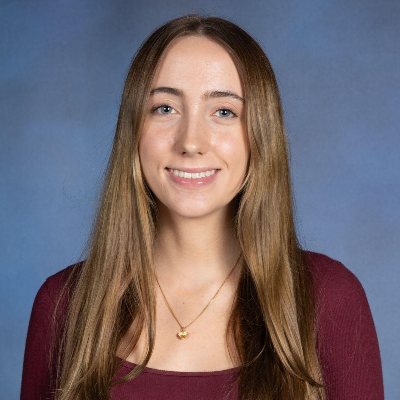
Alice Ziegler
Rosso Service has named Alice Ziegler the Fall 2026 recipient of the Engineering Excellence Scholarship. Alice started her college journey this fall at Washington University in St. Louis. She hopes to use her engineering education to combine technical innovation with an understanding of the people it serves. We can’t wait to see what Alice accomplishes!
Read Their Essay Here:
When I was eleven years old, I earned my amateur (ham) radio license, but that journey started months earlier when I began asking my dad to take me to ham radio classes and events around New England. We drove to places like the Deerfield Hamfest in New Hampshire, where I wandered from booth to booth, fascinated by antennas, radios, and operators talking with people hundreds or even thousands of miles away. At home, my dad patiently helped me study for my amateur radio licensing exam, answering my endless questions and encouraging my curiosity every step of the way.
When I finally earned my license, I wasn't just proud that I had passed a test. I was amazed that invisible radio waves could connect people across the world through technology that I could learn to understand and build myself. We even camped at Stellafane (an annual amateur telescope convention) in Vermont, spending nights looking through telescopes with amateur astronomers from across the country. Looking back, those weekends with my dad were the beginning of my journey toward engineering.
A few years later, that curiosity found another outlet in my favorite middle school project: building a bridge made entirely of toothpicks. I spent hours sketching different truss designs, testing ideas, and making small adjustments to strengthen the structure. On competition day, my bridge held 32 pounds before finally breaking, earning first place. I was excited that I had won, but what stayed with me even more was wondering why my design had worked so well. That project taught me that engineering is more than using the most materials or building the biggest structure. It is about understanding how things work, learning from every test, and finding smarter solutions.
By eighth grade, I knew I wanted to spend high school surrounded by students who were just as excited about science and engineering as I was. I applied to the Maine School of Science and Mathematics because I wanted an environment where asking difficult questions and solving complex problems was part of everyday life. After completing the entrance exam and interview, I was thrilled when I was accepted. Moving five hours away from home to attend a residential STEM school was a big step, but it was exactly the challenge I was looking for. Every class pushed me to think differently, ask better questions, and work through problems where the answers aren’t always obvious.
During high school, I had the opportunity to intern at the University of Southern Maine, where I helped design and assemble affordable prosthetic hands for people in the Dominican Republic. At first, I expected to spend most of my time learning from experienced researchers and professors. Instead, they encouraged me to contribute my own ideas. I helped assemble more than fifty prosthetic hands and redesigned part of the gripping actuator to improve its performance, even contributing an idea that became part of a provisional patent.
The moment that has stayed with me most happened when one of the prosthetic hands successfully gripped and lifted a water bottle. Everyone in the lab paused for a second, celebrating something that seemed so simple. As I watched that hand move, I thought about the person who might someday use it to regain a little more independence. That was the moment engineering became more than solving technical problems. It became a way to improve someone's everyday life.
That lesson has stayed with me in every engineering project since. As part of my school's CubeSat team, I helped design components for a satellite that was launched into near space on a high altitude balloon. Although our work earned first place in Maine's CubeSat Design Competition, the biggest lesson came from the countless revisions, testing, and problem solving required to turn an idea into a working design. Our CubeSat was designed to study how radiation affects different materials, but the night before launch we discovered we didn't have enough battery power to run both the sensor and camera at the same time. Working together, we reprogrammed the controller so the camera and sensors operated sequentially instead of simultaneously. That experience taught me that engineering is an iterative process requiring persistence, teamwork, and a willingness to keep improving.
This summer, I am studying Mandarin in Taiwan through the National Security Language Initiative for Youth (NSLI-Y) scholarship. Although it is very different from engineering, living in another country has reminded me that the best solutions come from understanding people with different experiences and perspectives. Engineers design for people, not just for problems on a page, and I believe those perspectives will make me a better engineer.
This fall, I will begin studying biomedical engineering at Washington University in St. Louis. I am excited to continue learning through research, design, and collaboration while exploring ways engineering can improve people's lives. Whether I eventually work on medical devices, sustainable technologies, or something I have not yet imagined, I hope to build solutions that are both innovative and meaningful.
When I think back to earning my ham radio license at eleven years old, I realize I was beginning to discover something much bigger than how radios worked. I was discovering the excitement of asking questions, solving problems, and connecting with people through technology. From building a toothpick bridge, to designing prosthetic hands, to contributing to a CubeSat, each experience has strengthened that same curiosity. Engineering, to me, has always been about making connections between ideas and people. That is the kind of engineer I hope to become.


LOCATION7 Newport Drive, Suite A  VIEW MAP VIEW MAP
|
BOOK ONLINE OR
|

